Arch Review
Arch Linux Current (September 2026): The Rolling Release You Build Yourself
Arch Linux is an independently developed, x86_64-optimised Linux distribution targeted at competent Linux users, according to its DistroWatch listing. It has no corporate parent and is not based on any other distribution — it stands entirely on its own, and that independence shapes everything about it.
Rather than numbered releases, Arch operates on a rolling release system: there is one evergreen “current” release (dated 2026-09-17 on DistroWatch), and your system simply updates forward from there. You install once and keep rolling — our CachyOS review covers an Arch-based distro that takes this same rolling philosophy and tunes it for out-of-the-box performance.
The default install is deliberately minimal: a solid base that you build into a custom installation. Arch hands you the bricks — you design the house. It is a refreshing contrast to distros that decide everything for you, and it is exactly why Arch has one of the most loyal followings in Linux.
At a Glance
| Based on | Independent |
| Release model | Rolling |
| Latest release | current (2026-09-17) |
| Package manager | pacman (home-grown, full dependency tracking) |
| Package format | pkg |
| Architecture | x86_64 |
| Init system | systemd |
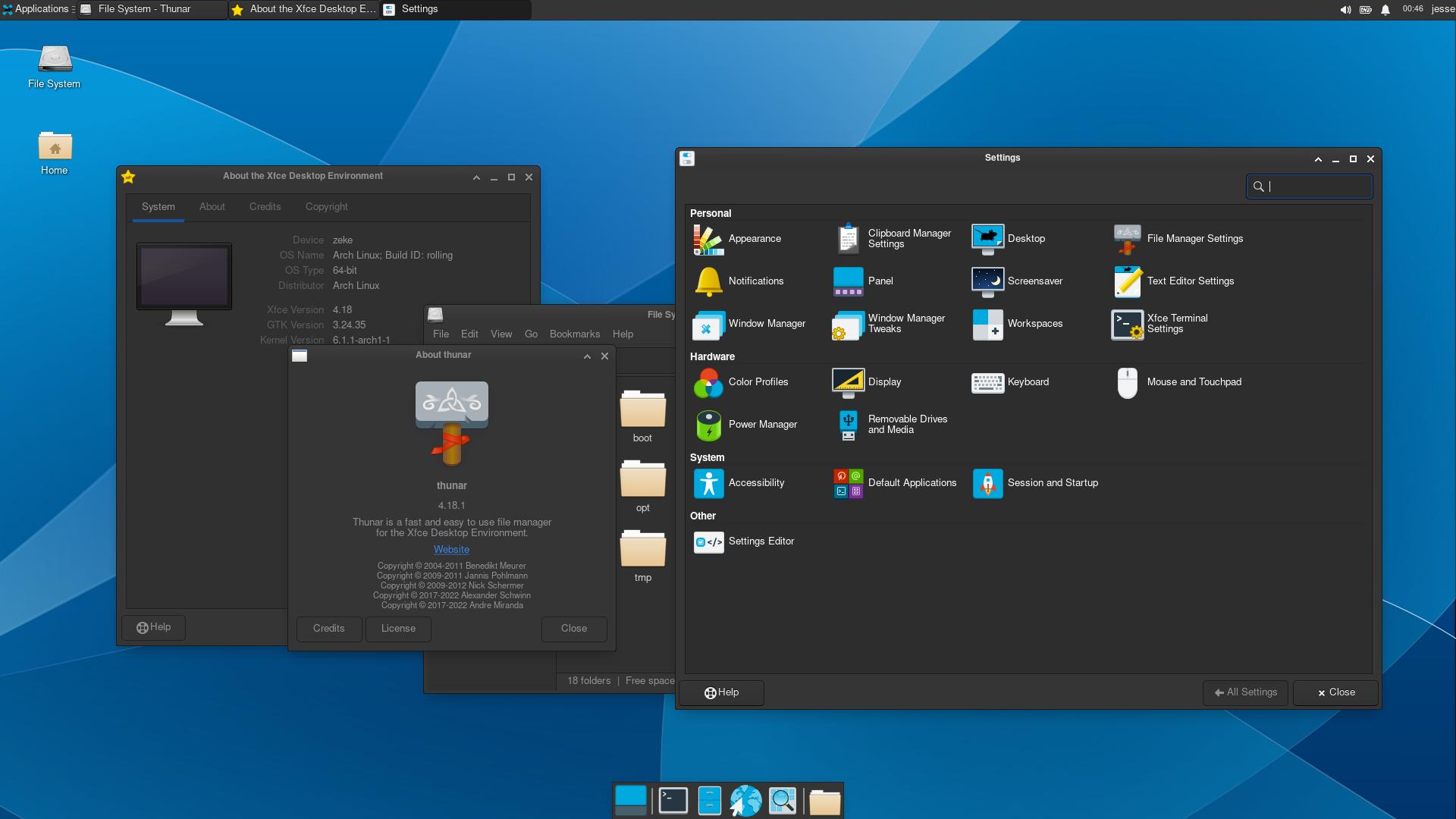
| Desktops available | Cinnamon, Enlightenment, GNOME, KDE, labwc, LXDE, MATE, Xfce (no default desktop) |
| Installation | Text mode (CD image or FTP server) |
| Filesystems | Btrfs, ext3, ext4, JFS, ReiserFS, XFS |
| Price | Free |
| Origin | Canada |
| DistroWatch rank | #14 (6-month page-hit ranking) |
| Reader rating | 9.1/10 from 308 reviews |
All facts above are from Arch’s official DistroWatch listing.
Try YouTube TV | Special Discount
Rolling Release: Always Current, Never Reinstalled
With a rolling release model there is no “next version” to wait for — the “current” release simply keeps moving forward. Updates flow continuously, so the system stays on the latest software without ever needing a reinstall. The trade-off is that you update on a continuous stream rather than a fixed schedule, but for many users that constant freshness is the whole point. EndeavourOS, another Arch-based rolling distro, offers the same always-fresh model with a friendlier graphical installer.
The Minimal Base: Your System, Your Rules
Arch’s default install is a solid, minimal base — not a finished desktop. You add only what you want, which means no bloat and no software you did not ask for. Installation is text-mode, from a CD image or via an FTP server, and the process has you build the system piece by piece. It is more hands-on than a point-and-click installer, but you finish knowing exactly what is on your machine and why.
Free Credit Score Monitoring At Sofi
pacman, ABS, and the Arch User Repository
Arch uses pacman, its home-grown package manager, to provide updates to the latest software applications with full dependency tracking. Beyond the official repositories, the Arch Build System (ABS) provides a way to easily build new packages, modify the configuration of stock packages, and share these packages with other users via the Arch Linux user repository (AUR). That community repository is one of Arch’s greatest strengths, extending what you can install far beyond the official repos.
Desktop Freedom: No Default, Your Choice
Arch ships with no default desktop environment — the DistroWatch listing leaves that field blank, and that is the point. Cinnamon, Enlightenment, GNOME, KDE, labwc, LXDE, MATE, and Xfce are all available, and you install whichever you want. If you would rather have a polished desktop chosen for you, our Linux Mint review covers a distro that makes those decisions up front; Arch is for those who would rather assemble their own.
Refinance Your Student Loan At Sofi
Who Should Try Arch Linux?
- Experienced Linux users who want full control over every package on their system.
- Tinkerers and learners — building an Arch system teaches you how Linux actually works.
- Freshness seekers who always want the latest software versions.
- Minimalists who dislike bloat and want a system containing nothing they did not choose.
- DIY desktop builders who want to pick their own environment, from Cinnamon to labwc.
If the text-mode install sounds like too much, Manjaro delivers an Arch-based rolling system with a graphical installer and more hand-holding.
Final Thoughts
Arch Linux is the distro for people who view their operating system as a project, not a product. Independent, rolling, minimal, and unapologetically hands-on, it trusts you to build the system you want — and rewards you with a fast, current, bloat-free machine that is exactly yours. It is not the easiest path in Linux, but for competent users it is one of the most satisfying. That 9.1/10 reader rating from 308 DistroWatch reviews suggests the community agrees.
Source: DistroWatch — Arch Linux, release “current” (2026-09-17). All facts in this review are drawn from that listing.