FreeBSD Review
FreeBSD 15.0: The Unix That Refuses to Die
Every other review on this site covers a Linux distribution. FreeBSD is not Linux — and that is exactly why it is here. According to its DistroWatch listing, FreeBSD is a UNIX-like operating system descended from U.C. Berkeley’s 4.4BSD-Lite, with roots stretching back to the earliest days of Unix itself. While Linux distributions multiply and fork, FreeBSD has quietly done one thing for decades: kept a complete, coherent operating system developed and maintained as a single project.
The listing describes FreeBSD as being used by companies, Internet Service Providers, researchers, computer professionals, students and home users around the world. It ships with over 20,000 pre-compiled packages, and its DistroWatch categories — Desktop, Firewall, Raspberry Pi, Server — hint at a system that is as comfortable on a home firewall as it is on a production server. If you read our Void review, you will recognize a kindred spirit: an independent system that ignores the mainstream consensus and does things its own way.
This review covers FreeBSD 15.0, released 2025-12-02 per DistroWatch’s release announcements. It is free, actively developed, and sitting at DistroWatch popularity rank 26 — a remarkable showing for a system that predates Linux itself.
At a Glance
| Release | 15.0 (released 2025-12-02) |
| OS Type | BSD (UNIX-like, not Linux) |
| Based On | Independent — descended from 4.4BSD-Lite |
| Origin | USA |
| Architectures | amd64, i386, aarch64, arm, armel, ia64, mips, mipsel, powerpc, ppc64, sparc64, pc98, ps3, xbox |
| Desktops | Cinnamon, GNOME, KDE Plasma, labwc, LXQt, Mango, MATE, Wayfire, Xfce |
| Installer | Text-mode installer |
| Package Format | txz (binary packages via pkg) |
| Image Size | 200–4300 MB |
| Price | Free |
| DistroWatch Popularity | Rank 26 (372 hits/day) |
| Visitor Rating | 8.6/10 from 86 reviews |
All facts from FreeBSD’s DistroWatch listing; release per the 2025-12-02 announcement.
One Project, One System
The biggest philosophical difference between FreeBSD and Linux is structural. A Linux distribution assembles a kernel, a userspace, and thousands of packages from different projects; FreeBSD develops the kernel and the core userland together, as one codebase, with one project overseeing it. The result, per its listing, is a famously coherent system: the handbook matches the system, the system matches the ports, and everything feels like it was designed by people who talk to each other.
That coherence is why FreeBSD keeps winning in the places it cares about. Servers, firewalls, and network appliances are full of BSD code even when the box says otherwise. If you have ever configured pfSense or OPNsense, or streamed from a service running ZFS-backed storage, you have benefited from FreeBSD without knowing it.
The Ports Collection and pkg
FreeBSD’s listing notes over 20,000 packages, and there are two ways to get them. The ports collection is a tree of build recipes that compile software from source with your chosen options — the original “compile it your way” system, and the spiritual ancestor of Gentoo’s Portage. The pkg tool installs the same software as pre-compiled txz binaries when you would rather not wait for a compile.
This duality is FreeBSD’s superpower: tinkerers get full control over build options, and everyone else gets fast binary installs. The listing’s package format is txz across the board, and the combination means you can mix compiled-from-source and binary packages on the same system.
Get An Easy Personal Loan At Sofi
A Desktop, If You Want One
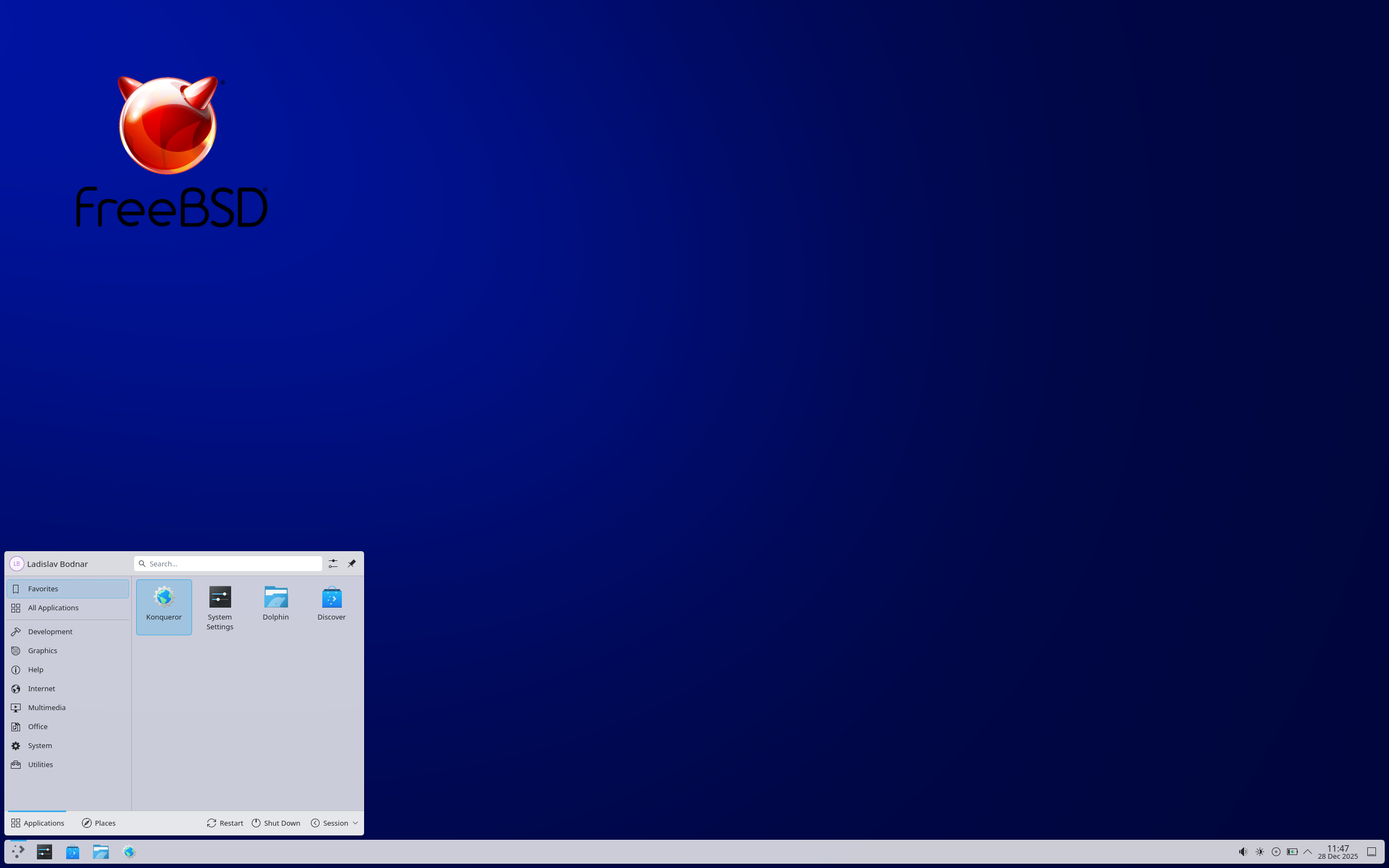
FreeBSD does not ship a default desktop — the listing’s desktops column names Cinnamon, GNOME, KDE Plasma, labwc, LXQt, Mango, MATE, Wayfire, and Xfce, all installable from packages. The installer itself is text-mode: this is a system that expects you to know what you are doing, then gets out of your way.
That said, the range of available desktops is genuinely wide, including modern Wayland compositors like labwc and Wayfire alongside the classics. If your idea of a good time is a hand-built KDE Plasma workstation on a rock-solid Unix base, FreeBSD will happily oblige — and if you would rather have the desktop pre-configured, our Linux Mint review covers the friendlier end of the spectrum.
US Mobile | Plans As Low As $10, Get $30 Instantly
ZFS and the Server Soul
FreeBSD was the first major open-source system to ship production ZFS, and it remains the reference platform for it. Copy-on-write snapshots, checksumming, native RAID, and send/receive replication are first-class citizens — the kind of storage features Linux is still bolting on. For anyone building a NAS, a file server, or just a workstation they never want to lose data on, ZFS on FreeBSD is the gold standard.
Combine that with jails — FreeBSD’s lightweight container system, which predates Docker by over a decade — and you have a server platform that needs nothing else. If server duty appeals to you but you want to stay in the Linux world, our CachyOS review shows what a performance-tuned Linux looks like; FreeBSD takes a different road to the same reliability.
Refinance Your Student Loan At Sofi
Who Should Try FreeBSD?
- Server builders: ZFS, jails, and a coherent base system make FreeBSD a first-choice server OS.
- Unix purists: You want the BSD lineage — the system that kept the Unix flame while Linux took the spotlight.
- Ports tinkerers: You like compiling from source with your own options, but want binary packages when you are in a hurry.
- Firewall and NAS builders: The categories on its listing say it all: firewall, server, Raspberry Pi.
- Curious Arch users: If you read our Arch review and liked the DIY ethos, FreeBSD is the other great build-it-yourself tradition.
Final Thoughts
FreeBSD 15.0 is a reminder that the operating system world is bigger than Linux. Its 8.6/10 visitor rating across 86 DistroWatch reviews reflects a community that values stability, coherence, and technical excellence over trends. It will not hold your hand — the text-mode installer and bring-your-own-desktop approach see to that — but it rewards the effort with one of the most dependable systems ever shipped.
For a Linux user, the honest comparison is this: FreeBSD trades Linux’s hardware support and desktop polish for a unified, conservative, battle-tested core. Whether that trade is worth it depends on what you value. But three decades in, with popularity rank 26 and counting, FreeBSD has earned its place in any serious survey of open-source operating systems.
Source: FreeBSD’s DistroWatch listing (https://distrowatch.com/table.php?distribution=freebsd), release 15.0, 2025-12-02.