Garuda Review
Garuda Linux 260309: Arch, Sharpened for Speed
Garuda Linux wants to be the Arch-based distribution for people who love power but not pain. According to its DistroWatch listing, Garuda is a rolling distribution built on Arch Linux, but unlike Arch itself it ships with a graphical installer (Calamares) and a set of graphical system tools, so you get Arch’s freshness without assembling everything by hand.
The pitch that sets Garuda apart is performance. DistroWatch’s summary describes a performance-oriented distro stacked with tweaks: zram for smarter memory handling, a performance CPU governor, and custom memory management software. If you read our CachyOS review, you will recognize the recipe — Arch under the hood, speed first on top — but Garuda wraps it in flashier themes and a friendlier toolbox for newcomers.
Stability is the usual worry with rolling releases, and Garuda’s answer is baked in: the Timeshift backup utility, which makes system snapshots easy to take and restore. It is an unusual combination — bleeding-edge packages with a built-in safety net — and it is what makes Garuda worth a look for anyone who has admired Arch from a distance.
At a Glance
| Release | 260309 (released 2026-03-09) |
| Based On | Arch Linux |
| Desktops | Cinnamon, GNOME, Hyprland, i3, KDE Plasma, Mokka, Sway, Xfce |
| Installer | Calamares (graphical) |
| Package Management | pacman (pkg format) |
| Release Model | Rolling |
| Architecture | x86_64 |
| Init System | systemd |
| Filesystems | Btrfs, ext4, JFS, XFS |
| Default Browser | Firefox |
| Image Size | 2.8–4.6 GB |
| Price | Free |
| DistroWatch Popularity | Rank 29 (378 hits/day) |
| Visitor Rating | 8.5/10 from 290 reviews |
All facts from Garuda Linux’s DistroWatch listing, last updated 2026-03-09.
Arch Without the Assembly Required
The single biggest barrier to Arch is the installation and the command-line-first administration. Garuda removes both. The Calamares graphical installer handles partitioning and setup with a point-and-click workflow, and DistroWatch notes Garuda adds advanced graphical tools for managing the system afterward — a philosophy closer to Manjaro’s approach than to vanilla Arch.
That matters because the rest of the system really is Arch: pacman packages, a rolling release model, and the Arch User Repository ecosystem. If you want the same foundation stripped down to a minimal base, our EndeavourOS review covers the lightweight end of the Arch spectrum; Garuda sits at the opposite end, doing the configuration work for you.
Tuned for Speed
Garuda does not settle for default settings. Per DistroWatch, it enables zram (compressed swap in RAM), a performance-oriented CPU governor, and custom memory management software out of the box. These are the kinds of tweaks enthusiasts usually apply themselves — Garuda ships them as defaults.
The performance angle makes Garuda a natural pick for gamers. If gaming is your primary goal, it is also worth comparing with Nobara, another distro that ships with gaming-focused optimizations, to see which flavor of tuning you prefer.
Safety Nets for a Rolling System
Rolling releases update continuously, which means occasional regressions are a fact of life. Garuda’s answer is Timeshift integration — automated system snapshots you can roll back to when an update goes sideways. It is the distro’s honest acknowledgment that its audience wants the newest software without living on the edge unprotected.
That emphasis on recoverability pairs well with Btrfs as a supported filesystem, which makes snapshots cheap and fast. Taken together — rolling pacman packages plus snapshot-based rescue — Garuda is trying to offer the excitement of Arch with a parachute.
Get The Polymarket App - Get 50
Pick Your Desktop, Any Desktop
Few distros ship this many editions: Cinnamon, GNOME, Hyprland, i3, KDE Plasma, Mokka, Sway, and Xfce are all listed on Garuda’s DistroWatch page. The KDE Plasma edition is the visual flagship most reviewers talk about, but tiling-window-manager fans get first-class Hyprland, Sway, and i3 editions — a breadth of choice you rarely see in one project.
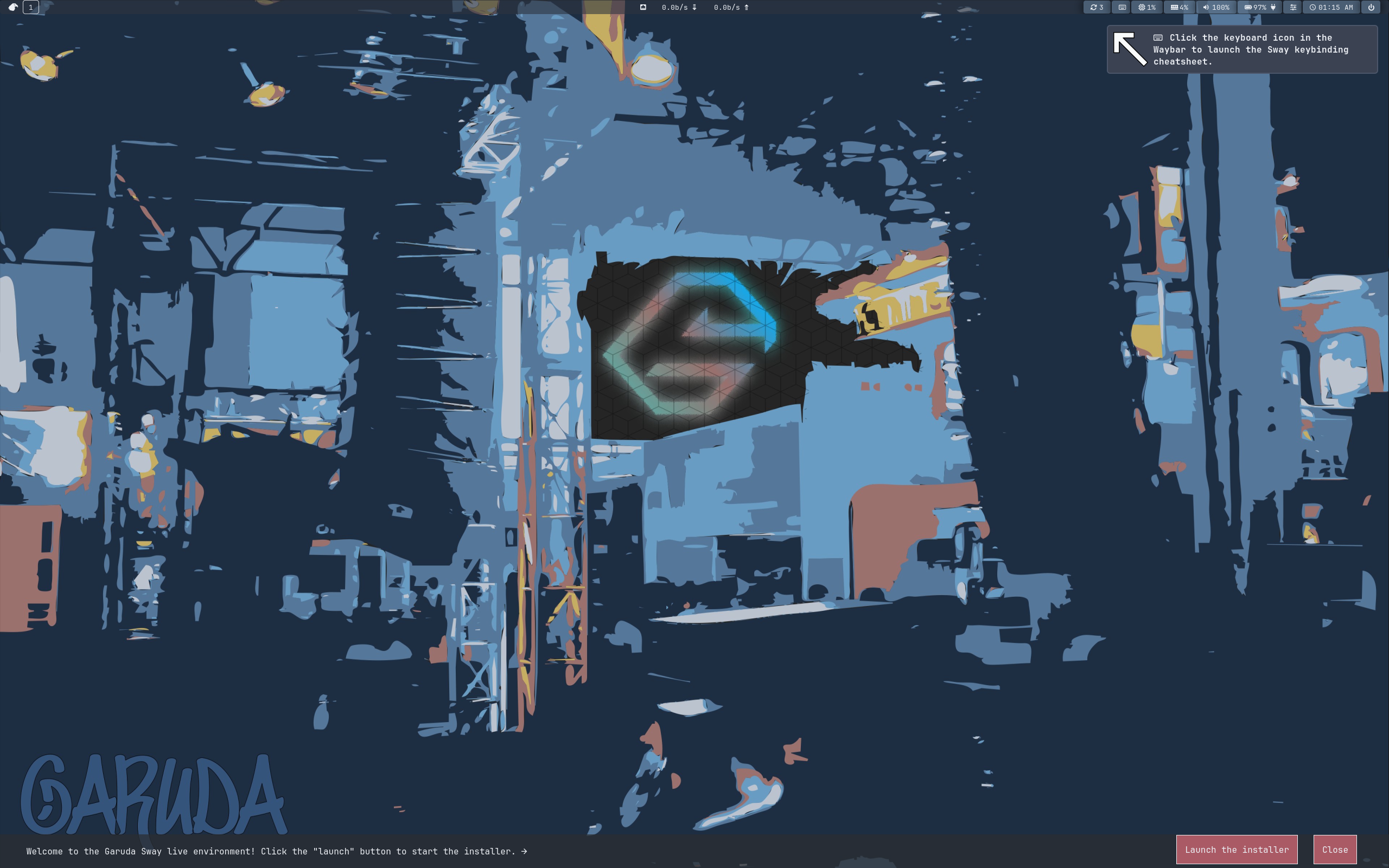
The featured screenshot for this review shows the Sway edition from Garuda’s DistroWatch gallery. Whichever edition you choose, the underlying system — rolling Arch base, performance tweaks, Timeshift — stays the same.
Who Should Try Garuda?
- Aspiring Arch users: You want Arch’s rolling packages and the AUR without the manual installation and terminal-heavy setup.
- Performance tinkerers: You would configure zram and a performance governor yourself — Garuda just saves you the trouble.
- Gamers: A tuned, rolling system with modern kernels and Mesa is a solid gaming foundation.
- Tiling WM explorers: Official Hyprland, Sway, and i3 editions make it easy to try a tiling workflow on a fully configured system.
- Refugees from point releases: If you are tired of reinstalling every six months, a snapshot-backed rolling model may suit you.
Final Thoughts
Garuda Linux is Arch with the sharp edges sanded down: a graphical installer, graphical administration tools, performance tuning by default, and Timeshift snapshots to catch you when the rolling model bites. Its 8.5/10 visitor rating across 290 DistroWatch reviews suggests the formula resonates — this is one of the best-liked Arch derivatives in the rankings.
It is not for everyone. Arch purists who build their systems from a minimal base will find Garuda’s defaults opinionated, and if you would rather do the assembling yourself, vanilla Arch is always there. But for everyone else — anyone who wants rolling-release freshness, real performance tuning, and a safety net under it all — Garuda 260309 is one of the easiest ways to get there.
Source: Garuda Linux’s DistroWatch listing (https://distrowatch.com/table.php?distribution=garuda), release 260309, 2026-03-09.