PikaOS Review
PikaOS 26.08.20: Debian Unstable Under the Hood, Five Desktops, and a Kernel Tuned for Gaming
Built on Debian’s cutting-edge Unstable branch, PikaOS ships a custom-tweaked kernel, up-to-date drivers, and a choice of GNOME, KDE Plasma, Hyprland, niri, and now COSMIC editions — all aimed squarely at gamers who want performance out of the box. Its latest release, PikaOS 26.08.20, carries a 9.1 out of 10 visitor rating on DistroWatch, one of the highest scores on the site. Here’s what the DistroWatch listing says.
According to its DistroWatch listing, “PikaOS Linux is a Linux distribution based on Debian’s cutting-edge “Unstable” branch, optimised for gaming. It is designed to provide out-of-the-box gaming experience, excellent performance with up-to-date drivers and custom-tweaked Linux kernel, and a choice of GNOME or KDE Plasma desktops, with separate editions that use the Hyprland Wayland compositor.” That is a distinctive pitch: most Debian-based distributions build on the stable branch, but PikaOS takes the bleeding edge — Debian Unstable — and packages it for play.
The release currently listed by DistroWatch is PikaOS 26.08.20, released August 20, 2026. It ranks 15 over the past 12 months (~617 hits per day), climbing to rank 10 over the past week — clear momentum. The visitor rating of 9.1 out of 10 from 50 reviews puts it among the best-rated distributions on DistroWatch. It is free, with ISO images of roughly 2,900–3,800 MB. If you have read our Debian review, PikaOS is the fascinating counterpoint: the same upstream DNA, but rewired for frame rates instead of server rooms.
At a Glance
| Feature | What PikaOS 26.08.20 Offers |
|---|---|
| Current listed release | PikaOS 26.08.20, released August 20, 2026 (Debian Unstable base) |
| Distribution base | Debian (Unstable branch) |
| Release model | Fixed |
| Default desktops | COSMIC, GNOME, Hyprland, KDE Plasma, niri (separate editions) |
| Package management | APT; deb and flatpak package formats |
| Installer | pikainstall |
| Default browser | Chromium |
| Kernel and graphics (26.08.20) | Linux kernel 7.1.8; NVIDIA driver 595.91.07; Mesa 26.2.0 |
| Supported architectures | x86_64 |
| Init system | systemd |
| Listed journaled file systems | Btrfs, ext4, XFS |
| Typical ISO size | Approximately 2,900–3,800 MB |
| Multilingual | Yes |
| DistroWatch popularity | Rank 15 over 12 months (~617 hits per day); rank 10 over the past week |
| Visitor rating | 9.1 out of 10 from 50 reviews |
| Price | Free |
Feature details and version information are based on the DistroWatch PikaOS listing for release 26.08.20.
Debian Unstable as a Foundation: Rolling Under the Hood
Most gaming distributions start from a stable or point-release base — Fedora, in Bazzite’s case, or Arch, in CachyOS’s. PikaOS goes a different direction: it builds on Debian’s Unstable branch, the constantly moving “Sid” stream that feeds future Debian releases. The payoff is freshness without switching ecosystems: the 26.08.20 listing names a Linux 7.1.8 kernel, NVIDIA driver 595.91.07, Mesa 26.2.0, GNOME Shell 50.3, Plasma 6.7.4, and systemd 261.2 — components as current as anything a rolling release ships.
AWS Alternative - Digital Ocean
The trade-off is worth naming. Debian Unstable is where packages land before they are hardened for release, so PikaOS’s job is to smooth that edge — curating, testing, and shipping a configuration that behaves for ordinary gamers. That is precisely the niche PikaOS occupies: Debian for people who want Debian to move fast. The release model DistroWatch lists is fixed, with dated releases like 26.08.20 and 25.12.20, so users get periodic, tested snapshots rather than a never-ending stream of Unstable updates.
Five Ways to Play: GNOME, KDE, Hyprland, Niri, and Now COSMIC
The standout change in 26.08.20 is the desktop lineup. DistroWatch lists COSMIC, GNOME, Hyprland, KDE Plasma, and niri as the default desktop options for this release — five separate editions. That breadth is unusual for a gaming distro, which usually ships one or two desktops. COSMIC is the newcomer: the 25.12.20 release lacked it, and it is a natural fit given COSMIC’s focus on performance and polish — readers of our Pop!_OS review will recognize the desktop System76 built from the ground up.
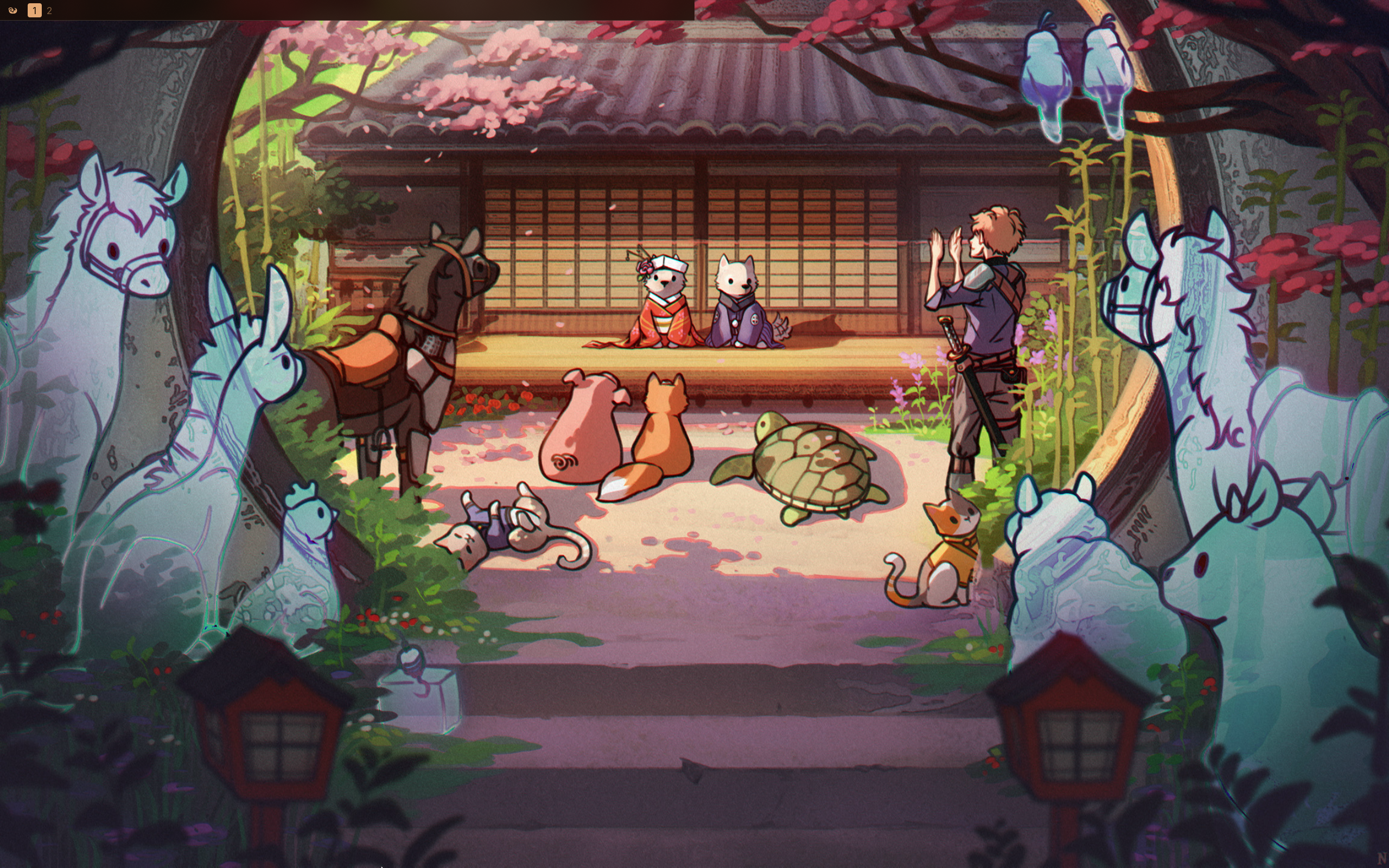
The inclusion of Hyprland (0.56.2 in this release) and niri shows where PikaOS’s audience really lives. These are Wayland-native tiling compositors aimed at keyboard-driven users — the kind of desktop where the featured screenshot’s anime-wallpapered niri session, with its tiny workspace indicators, feels right at home. A distribution that ships GNOME and KDE for the mainstream but treats Hyprland and niri as first-class editions is speaking directly to the Linux gaming community, where tiling window managers have a serious following. Whatever your preferred workflow, PikaOS does not ask you to install the distro and then rebuild the desktop yourself.
A Kernel Tuned for Play: Drivers, Mesa, and NVIDIA
“Up-to-date drivers and custom-tweaked Linux kernel” is doing the heavy lifting in PikaOS’s description, and the package versions back it up. Kernel 7.1.8 with an NVIDIA proprietary driver at 595.91.07 and Mesa 26.2.0 is a graphics stack aimed at extracting every frame — exactly the combination a gamer installing Debian Unstable by hand would reach for. PikaOS simply makes it the default.
Software arrives through APT with deb and flatpak formats supported, so Steam, Lutris, and friends are a package install away, and Flatpak covers the applications where sandboxing is welcome. The project ships its own installer, pikainstall, and offers three journaled file systems — Btrfs, ext4, and XFS — with x86_64 as the single supported architecture. Multilingual support is listed as yes, the project originates in the United Kingdom, and support channels include a wiki and Discord forums. The 26.08.20 release also trims the default browser lineup: Firefox was dropped, leaving Chromium as the sole default browser — a small but telling choice for a distro that would rather ship one tuned default than two half-configured ones.
Who Should Try PikaOS?
PikaOS is a specialist distribution, but its 9.1/10 rating suggests it fits its audience well:
- Gamers who want the newest drivers without rolling-release churn — Debian Unstable freshness with fixed, dated releases and a gaming-tuned kernel as the default.
- Debian users curious about Unstable — PikaOS is Debian’s bleeding edge curated into something you can actually game on, without hand-assembling the stack yourself.
- Tiling window manager enthusiasts — Hyprland and niri ship as first-class editions alongside GNOME and KDE, a rare commitment from any distro, let alone a gaming one.
- COSMIC-curious users — the new COSMIC edition in 26.08.20 is another way to try the desktop System76 is building, on a Debian base.
- Users who like Flatpak alongside APT — deb and flatpak formats are both supported, so you get the Debian repository and the sandboxed app catalog together.
Conversely, users who want the rock-solid predictability of Debian Stable, or who run non-x86_64 hardware, should look elsewhere — PikaOS is x86_64-only and deliberately builds on the cutting edge. And gamers who prefer an immutable, sealed base might find Bazzite’s read-only approach more their speed. But if your priority is a Debian system tuned for maximum frames per second, PikaOS is built exactly for that.
Final Thoughts
PikaOS 26.08.20 is an unusual and confident formula: Debian Unstable as the base, a fixed release cadence on top, a custom-tweaked 7.1.8 kernel with current NVIDIA and Mesa drivers, five desktop editions from GNOME to niri, APT plus Flatpak, and a free, multilingual x86_64 ISO. The 9.1/10 visitor rating across 50 reviews is among the strongest on DistroWatch, and the climb to rank 10 over the past week suggests word is getting out.
Where our CachyOS review covers another gaming-first distribution with a rolling Arch philosophy, PikaOS makes a different bet: Debian speed, curated into fixed releases, with the desktop choice most gaming distros never offer. For the Debian user who envies rolling-release freshness, or the gamer who wants the latest drivers without the rolling-release risk, that bet is worth a look.
Source: DistroWatch PikaOS page (https://distrowatch.com/table.php?distribution=pikaos). Information cited in this post reflects the DistroWatch listing and release information for PikaOS 26.08.20, released August 20, 2026.