FunOS Review
FunOS 26.04: Featherweight JWM on an Ubuntu Foundation
Most Ubuntu-based distributions try to be all things to all people, stacking heavier and heavier desktops on top of the same base. FunOS takes the opposite path. This is an Ubuntu-based Linux distribution built around the JWM graphical user interface — a stacking window manager so light it barely registers — with the stated goal of being more lightweight than the official Ubuntu community editions while keeping the same application compatibility and hardware support. If you’ve ever installed a mainstream Ubuntu flavor on an aging laptop and watched it struggle, FunOS is the counter-proposal: keep the Ubuntu underneath, ditch the weight on top.
According to its DistroWatch listing, FunOS sits in the Desktop, Live Medium, and Old Computers categories, and its active development cadence is impressive for a project of this size. The latest stable release is FunOS 26.04, released April 23, 2026, and a 26.10 beta landed on October 5, 2026. Readers rate it 9.3 out of 10 across 9 reviews on DistroWatch — a strong signal for a niche lightweight distro.
At a Glance
| Base | Debian / Ubuntu |
| Default Desktop | JWM |
| Release Model | Fixed |
| Architecture | x86_64 |
| Installer | Calamares (26.04 and newer) / Ubiquity (older releases) |
| Package Format | deb (APT) |
| Default Browser | Firefox ESR |
| Init System | systemd |
| Filesystems | Btrfs, ext4 |
| Price | Free |
| Status | Active |
| DistroWatch Rank | 92 (157 hits per day) |
| Visitor Rating | 9.3/10 from 9 reviews |
JWM: Minimalism That Still Feels Like a Desktop
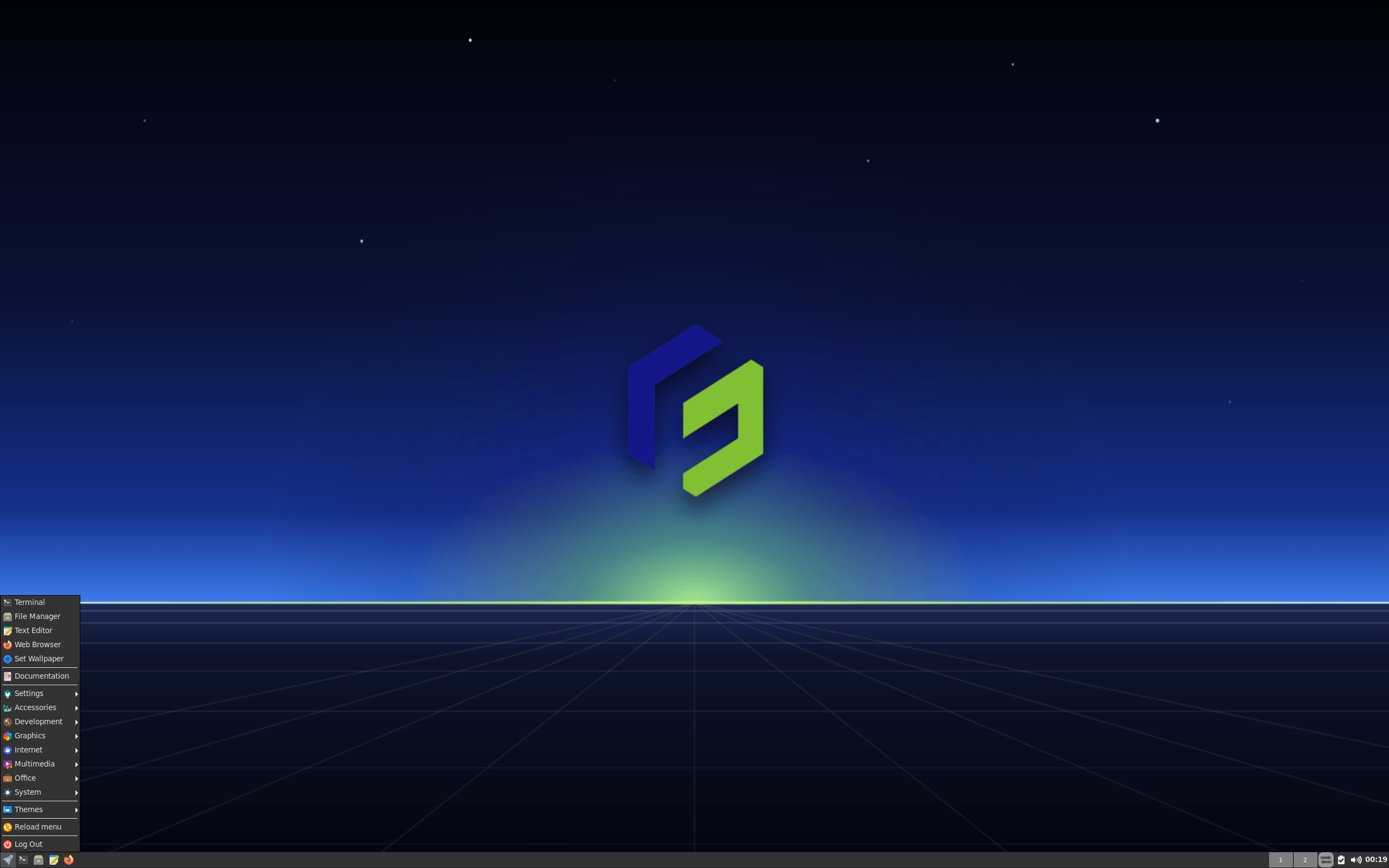
JWM (Joe’s Window Manager) is not a desktop environment in the GNOME or KDE sense — there’s no compositor, no widgets, no heavy shell. What you get is a classic taskbar, a start menu, a system tray, and snappy window management that feels familiar the moment you see it. FunOS’s implementation keeps things tidy rather than barren, so the learning curve is genuinely flat: if you can use Windows XP-era interfaces, you can use this.
The payoff is measurable. One DistroWatch reader reviewer measured roughly 263 MB of idle RAM usage, which puts FunOS in the same territory as our antiX review‘s minimal systems — only with the full Ubuntu software stack sitting underneath. Machines that choked on a full GNOME session become usable again.
Refinance Your Student Loan At Sofi
Ubuntu Underneath, Minus the Bulk
FunOS being based on Debian and Ubuntu means the compatibility story writes itself: PPAs work, deb packages install with APT, and hardware support follows Ubuntu’s kernels. The 26.04 LTS release ships Linux kernel 7.0 with Mesa 26.0.3, while the October 2026 beta moves to kernel 7.3. If you’ve read our MX Linux review, you’ll recognize the pitch — another Debian-based option that favors responsiveness — though FunOS goes further on the minimal side with JWM instead of Xfce.
Installation is handled by Calamares on current releases (older ones used Ubiquity), Firefox ESR ships as the default browser, and systemd plus Btrfs/ext4 support keep the internals thoroughly mainstream. Nothing exotic, nothing to fight with — just a familiar Ubuntu experience stripped to the studs.
A Release Cadence That Keeps Up
FunOS tracks a fixed release model aligned with Ubuntu’s rhythm. The release history on DistroWatch shows steady output: 22.04.5 LTS in October 2024, 24.04.4 and 24.10 in early 2025, 25.04 and 25.10 through 2025, the 26.04 LTS in April 2026, and now a 26.10 beta as of October 5, 2026. Image sizes run roughly 1.9–2.2 GB, and the distro ships as a live medium, so you can test-drive the whole JWM experience from a USB stick before committing.
That live-first approach also makes it a natural rescue or travel distro — similar in spirit to what we covered in our Peppermint review, another lightweight Ubuntu derivative that values speed over spectacle.
Who Should Try FunOS?
- Owners of aging hardware — netbooks, old office desktops, and anything that wheezes under a modern full desktop.
- Minimalism fans — if you find yourself disabling animations and stripping autostart entries, FunOS starts where you were heading.
- Ubuntu users who want the stack without the weight — same APT, same deb packages, same hardware support, at a fraction of the RAM.
- Live-USB tinkerers — the live medium makes it a handy pocket system for testing or reviving machines.
- Anyone curious about JWM — this is one of the most polished JWM showcases you’ll find.
Final Thoughts
FunOS doesn’t try to be the prettiest or the most feature-laden distribution — it tries to be the one that makes old hardware feel new while refusing to abandon the Ubuntu ecosystem. That single-mindedness is its strength. JWM won’t impress anyone at a glance, but a few hours in, the speed and simplicity win you over, and the 9.3/10 reader rating suggests we’re not alone in that verdict.
If your priority list reads speed, simplicity, and compatibility, in that order, FunOS deserves a download. For a heavier but still user-friendly take on the same Ubuntu family, see our Xubuntu review.
Source: the FunOS page on DistroWatch — facts above are drawn from its listing, release table, and reader reviews; latest stable release 26.04 (April 23, 2026), with 26.10-beta released October 5, 2026.